Buying guide
Arc flash PPE: what the ratings mean
How do I read arc flash PPE ratings and choose the right protection?
The short answer
Arc flash PPE is rated by testing against an electrical arc. Two test methods are common under the EN 61482 series: a box test that gives an arc class (Class 1 or Class 2, based on the test current), and an open arc test that gives an energy rating such as ATPV, measured in calories per square centimetre. A higher number or class means the product was tested against a larger event, but the rating you need comes from an arc flash risk assessment carried out by a competent person for the work you are doing. Compare the rating on each product with that assessment, and remember that gloves, face protection and clothing are used together.
Two ways PPE is rated
| Rating | How it is tested | How it is shown |
|---|---|---|
| Arc class (box test) | Tested against a defined arc in a box, in the EN 61482 series | Class 1 or Class 2, based on the test current |
| Energy rating (open arc) | Tested against an open arc, in the EN 61482 series | A figure in cal/cm2, such as ATPV, the energy at which a burn is predicted |
The rating comes from your risk assessment
A competent person works out the energy an arc could release at the point you work. The rating on the PPE must be suitable for that result. Do not choose by price or by the largest number on the page.
The parts of an arc flash kit
- Hand protection: arc-rated gloves, sometimes combined with cut resistance, with the rating stated on the product page.
- Face protection: an arc flash visor, given an arc class on its product page, often designed to fit specific compatible helmets.
- Clothing: flame resistant garments, which limit how far a fabric keeps burning, and which may also carry an arc rating.
These parts work as a system. A glove with a high rating does not make up for clothing or face protection that is rated lower, and each item needs to be compatible with the others. Where garments are layered, the combined performance matters, and manufacturers publish guidance on which products to wear together.
Arc flash products
Arc-rated gloves and visors from the catalogue. Each product page states its own rating.

Coveralls · MV28
Modaflame Work Hi-Vis Multi-Norm Contrast FR Coverall
Despatched within 1-2 working days

Specialist Gloves · A780
FR Arc Cut D13 Level 2 Glove
Despatched within 1-2 working days
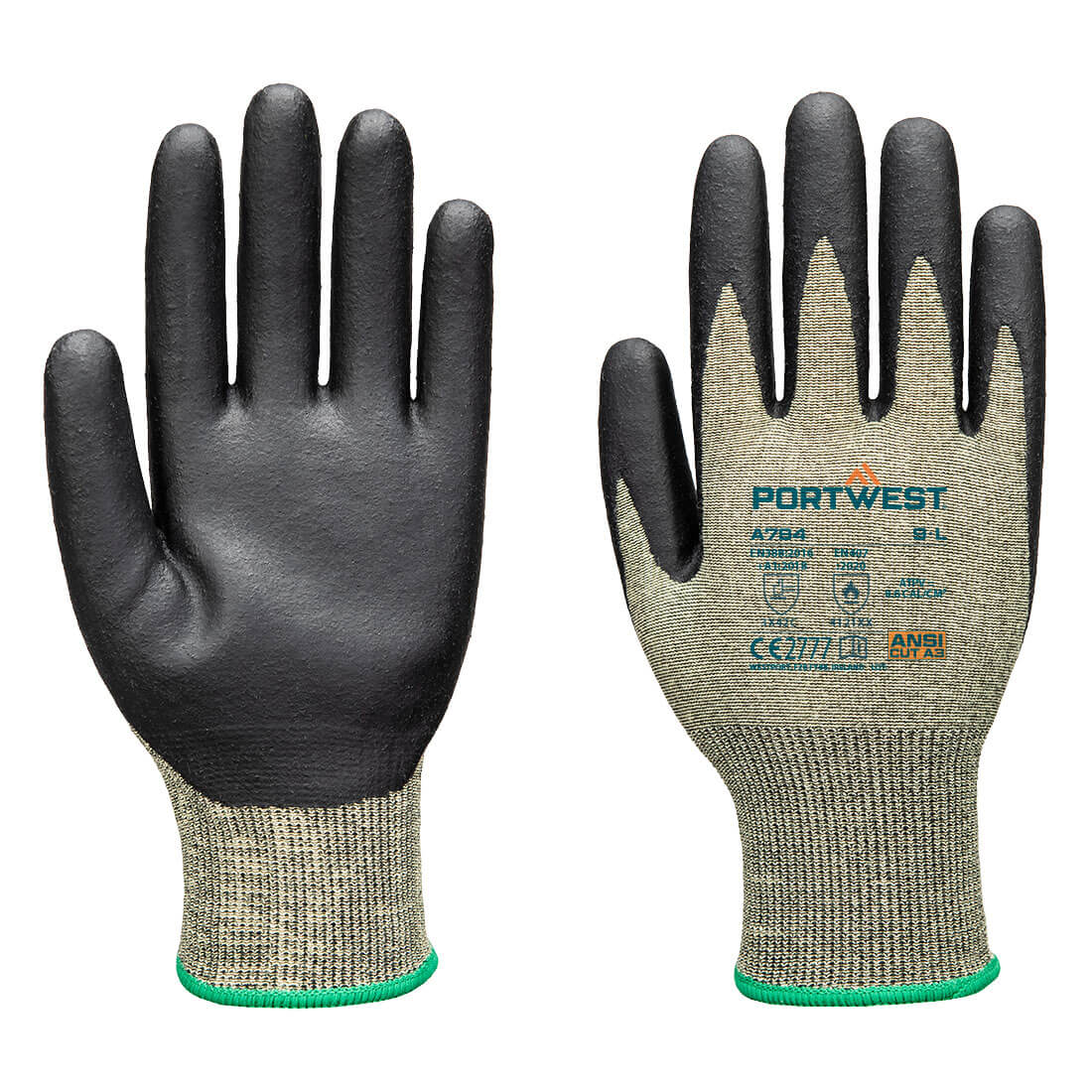
Specialist Gloves · A784
FR Arc Cut C18 Level 2 Glove
Despatched within 1-2 working days

Work Jackets · MV25
Modaflame Work Hi-Vis Multi-Norm Contrast FR Jacket
Despatched within 1-2 working days
Specialist PPE needs competent advice
This guide explains how ratings are expressed. It does not replace an arc flash risk assessment or the advice of a competent person, and it is not a substitute for your employer's safe systems of work.
Common questions
What is ATPV?
ATPV stands for arc thermal performance value. It is the incident energy, in calories per square centimetre, at which a second-degree burn is predicted through the tested material.
Is flame resistant clothing the same as arc-rated clothing?
Not necessarily. Flame resistant clothing limits how long the fabric keeps burning. Arc-rated clothing has also been tested against an electrical arc and carries a rating for it. Check the markings on each garment.
Who decides which arc rating I need?
A competent person carries out an arc flash risk assessment for the work. Your employer is responsible for providing suitable PPE based on it.
Keep reading
Still not sure what you need?
Check the standard against your own risk assessment, and if you are still not sure, call us and talk it through with someone who knows the catalogue.