
Buying guide
Choosing work gloves by task
Which work gloves do I need, and what do the glove standards cover?
The short answer
Match the glove to the hazard, not to the thickest glove on the shelf. EN 388 covers mechanical risks such as abrasion, cuts and punctures. EN 407 covers heat and flame, EN 511 covers cold, and EN ISO 374 covers protection against chemicals and micro-organisms. Sizing is covered by EN 420, so a glove that fits properly keeps both protection and dexterity. Check the markings on each glove and compare them with the hazards in your own risk assessment.
Which standard covers which hazard
| Standard | Covers | Use it for |
|---|---|---|
| EN 388 | Mechanical risks: abrasion, cut, tear, puncture and, where marked, impact | General handling, cut hazards, demolition and heavy work |
| EN 407 | Thermal risks from heat and flame | Hot surfaces, welding and foundry work |
| EN 511 | Cold | Winter site work, outdoor handling and cold stores |
| EN ISO 374 | Chemicals and micro-organisms | Chemical handling, cleaning and laboratory work |
| EN 420 | General requirements and sizing | Fit, dexterity and marking on every protective glove |
A glove can carry more than one mark. A winter glove may be tested for cold and also for abrasion, and a cut resistant glove may have a coating suited to oily or wet handling. Read the markings on the glove and the details on the product page, and see our guide to EN 388 glove ratings for how to read the EN 388 numbers and letters.
A simple way to choose
- 1
Name the hazard
Cuts, abrasion, heat, cold, chemicals or impact. Many jobs have more than one.
- 2
Pick the standard
Use the table above to find which standard covers the hazard.
- 3
Check the rating
Compare the level on the glove with your risk assessment, not with the highest number available.
- 4
Get the size right
A tight glove tires the hand and a loose one catches. Our size guide shows how to measure.
- 5
Consider grip and dexterity
A thinner glove often gives better feel for fine work. Choose the coating for the surface you handle, such as dry, wet or oily.
Work gloves
Grip gloves from the catalogue. Each product page lists its standards and sizes.
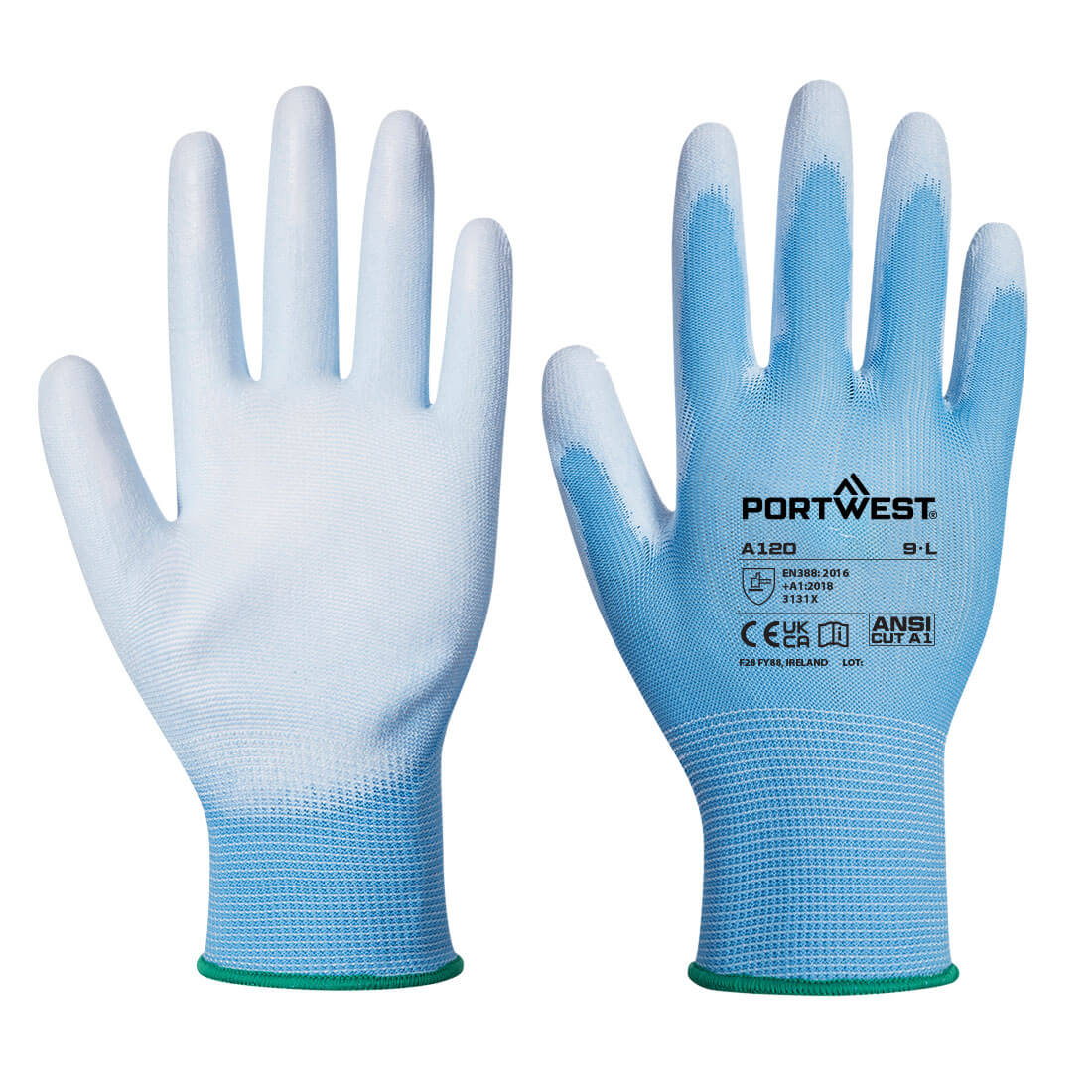
Grip Gloves · A120
Grip 13 PU Palm Glove
Despatched within 1-2 working days
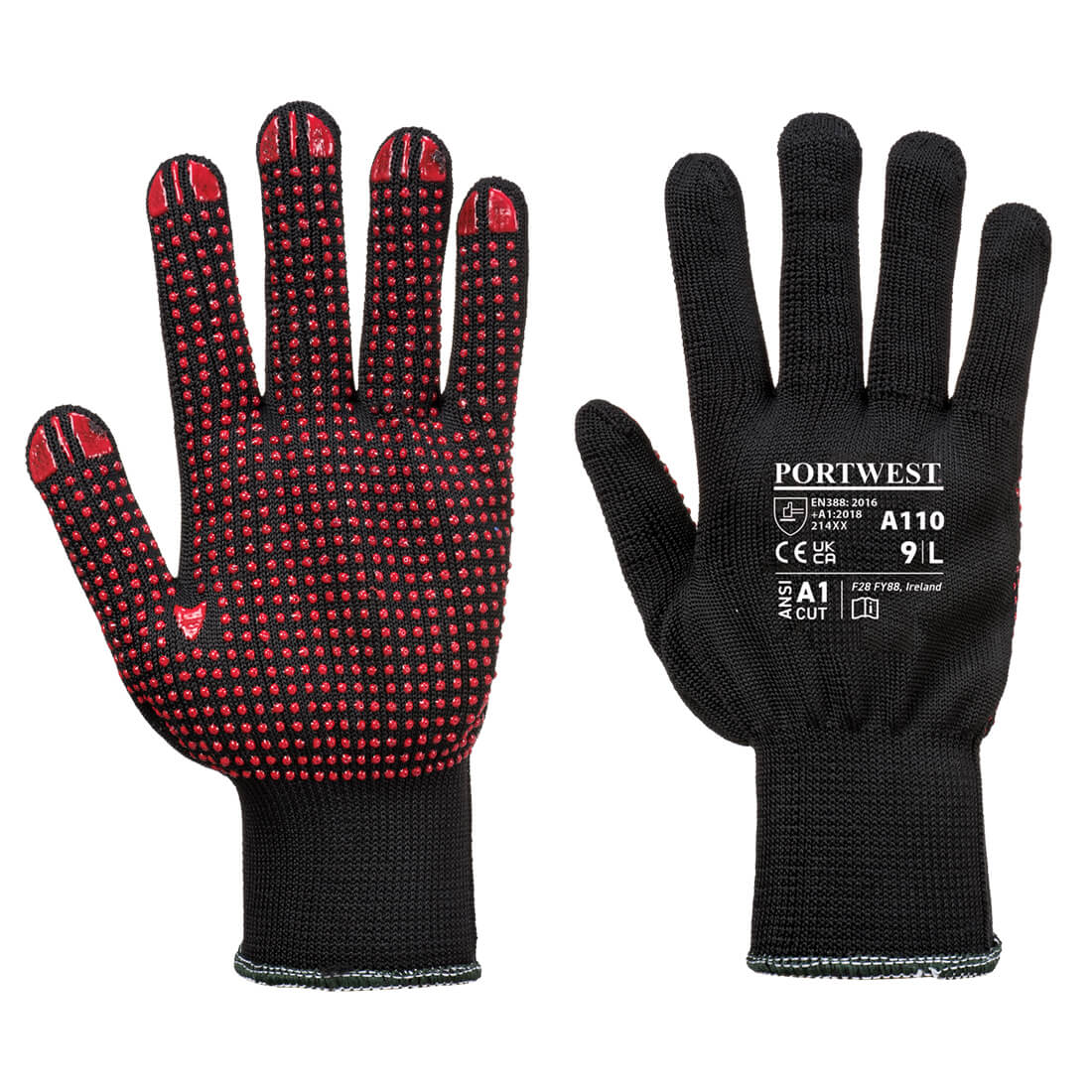
Grip Gloves · A110
Grip 13 PVC Dotted Glove
Despatched within 1-2 working days

Grip Gloves · A310
Grip 13 Nitrile Glove
Despatched within 1-2 working days

Grip Gloves · A400
Grip PVC Knitwrist
Despatched within 1-2 working days
Check against your own risk assessment
Standards describe how a glove was tested. Your risk assessment decides which hazards are present and what level of protection you need.
Common questions
Is a cut resistant glove also good for chemicals?
Not automatically. Cut resistance and chemical resistance are tested separately. For chemical hazards, look for EN ISO 374 on the glove and check which chemicals it was tested against.
What size glove should I buy?
Measure around the palm and along the hand and match the figures to the size chart. If you fall between two sizes, take the larger. Our size guide has the EN 420 chart.
Can one glove do everything?
Rarely. Gloves trade protection for dexterity, so matching the glove to the main hazard for the task usually works better than choosing one thick glove for everything.
Keep reading
Still not sure what you need?
Check the standard against your own risk assessment, and if you are still not sure, call us and talk it through with someone who knows the catalogue.