
Buying guide
FFP2 vs FFP3 masks: EN 149 basics
What is the difference between an FFP2 and an FFP3 mask?
The short answer
Under EN 149, an FFP2 mask filters at least 94 percent of the test particles and an FFP3 at least 99 percent, with FFP1 at 80 percent. FFP3 also allows less leakage around the edge of the mask. The class on its own does not make a mask protective, because a tight seal against the face and the right choice for the substance and the exposure matter just as much. Your risk assessment should say which class a task needs.
What the FFP classes mean
FFP stands for filtering face piece. EN 149 sorts these disposable respirators into three classes by how much of a test aerosol they must stop and how much is allowed to leak in around the edges. The figures below are the minimum filtration efficiency from the standard.
| Class | Minimum filtration | Maximum total inward leakage | Typical use |
|---|---|---|---|
| FFP1 | 80 percent | 22 percent | Low hazard nuisance dust |
| FFP2 | 94 percent | 8 percent | Many dusts, mists and fumes where the exposure limit is not very low |
| FFP3 | 99 percent | 2 percent | Fine dust and harmful particles, including some hazardous substances |
A mask only works if it seals
These masks are tight-fitting. Beards and stubble on the sealing area, loose straps or a mask that does not suit your face shape let air bypass the filter. In a workplace, tight-fitting masks are normally face-fit tested to the HSE guidance, and a clean-shaven seal is expected.
Reading the markings
- NR means not reusable, intended for one shift. R means reusable, but only within the manufacturer's instructions.
- D means the mask has passed a dolomite dust clogging test, which is about how it behaves as it loads up and how easy it is to breathe through.
- A valve makes breathing out easier and can feel cooler. A valved mask does not filter what you breathe out in the same way, so check where that matters.
- A mask is for particles. It does not protect against gases or vapours, and it does not replace an air supply where oxygen may be low.
Disposable respirators
Disposable respirators from the catalogue. The class and markings are on each product page.

Disposable Respirators · P201
FFP2 Valved Respirator (Pk10)
Despatched within 1-2 working days
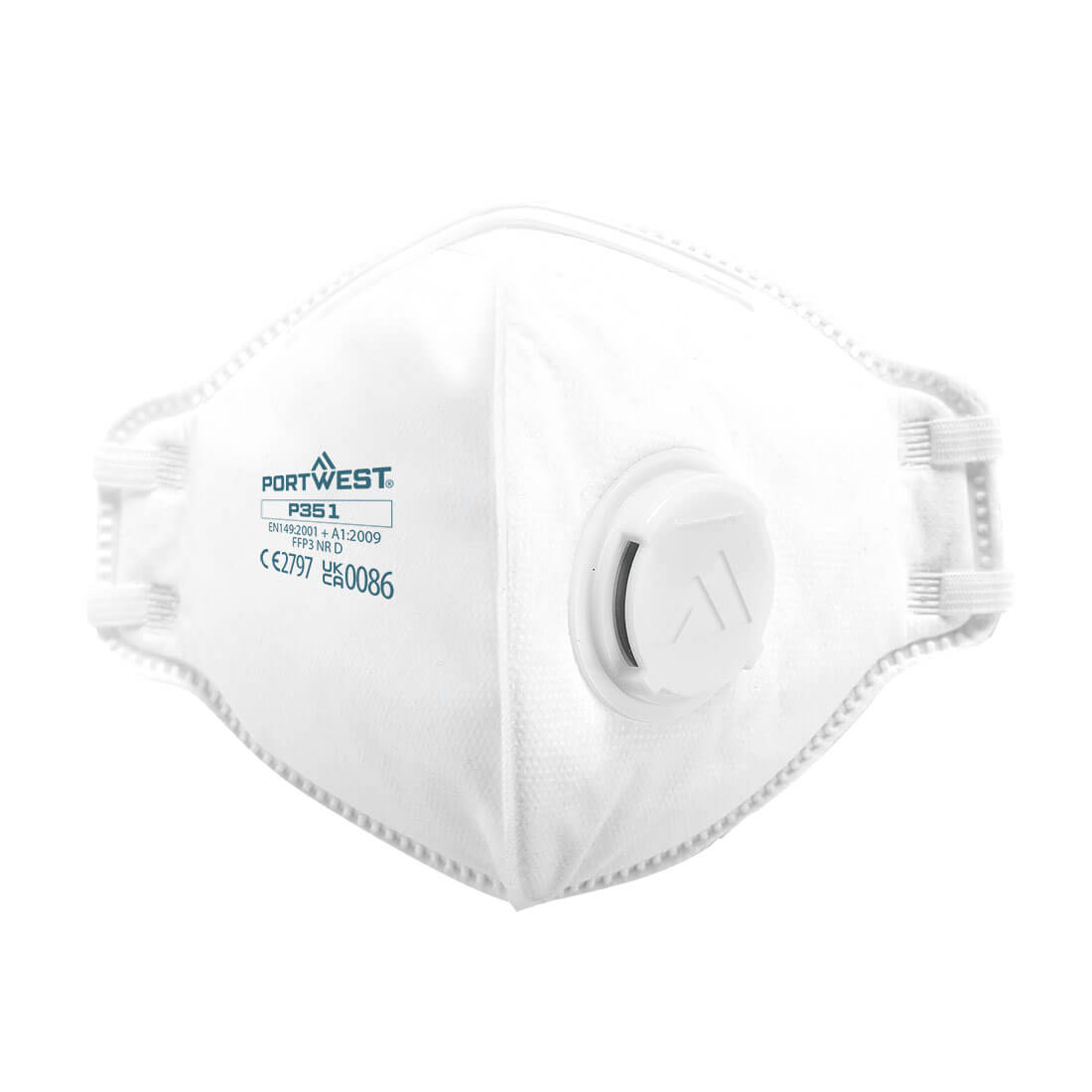
Disposable Respirators · P351
FFP3 Valved Dolomite Fold Flat Respirator (Pk20)
Despatched within 1-2 working days

Disposable Respirators · P200
FFP2 Respirator (Pk20)
Despatched within 1-2 working days

Disposable Respirators · P251
FFP2 Valved Fold Flat Respirator (Pk20)
Despatched within 1-2 working days
Check against your own risk assessment
This guide explains the standard. It is not a statement that a particular mask is suitable for a particular substance. Your employer's risk assessment, and for hazardous substances the COSHH assessment, decide the class and any fit testing needed.
Common questions
Can I wear a disposable mask more than once?
NR masks are intended for a single shift. R masks may be reused within the manufacturer's instructions. Replace any mask that is damaged, wet, soiled or hard to breathe through.
Is FFP3 always the right choice?
Not automatically. FFP3 gives the highest filtration, but it can be harder to breathe through, and the right class depends on the substance and the exposure. Your risk assessment should decide.
Does an FFP mask protect against fumes and vapours?
A particle filter does not stop gases or vapours. Where those are present you need a respirator with the right gas filter, chosen against your assessment.
Keep reading
Still not sure what you need?
Check the standard against your own risk assessment, and if you are still not sure, call us and talk it through with someone who knows the catalogue.