
Buying guide
Hi-vis classes explained: EN ISO 20471 Class 1, 2 and 3
What is the difference between Class 1, Class 2 and Class 3 hi-vis clothing?
The short answer
The class tells you how much fluorescent background material and how much retroreflective material a garment has, measured in square metres under EN ISO 20471. Class 1 is the lowest level, Class 2 is the usual minimum for work near roads and vehicles, and Class 3 is the highest, with the most material and with sleeves or full coverage. A higher class is not automatically better for every job, because it also depends on what your site rules, contract or risk assessment ask for, so check the requirement before you buy.
What EN ISO 20471 covers
EN ISO 20471 is the standard for high-visibility clothing. It sets minimum areas of fluorescent background material, which makes you stand out in daylight, and retroreflective material, which sends vehicle headlights back towards the driver in the dark. It also sets requirements for colour, how the reflective tape is placed and how well the garment keeps those properties after washing. Clothing that meets it carries the standard number and the class on its label.
The three classes side by side
| Class | Fluorescent background (min) | Retroreflective (min) | Typical garment |
|---|---|---|---|
| Class 1 | 0.14 square metres | 0.10 square metres | Lightweight vests, straps and accessories |
| Class 2 | 0.50 square metres | 0.13 square metres | Vests, trousers, short-sleeved tops |
| Class 3 | 0.80 square metres | 0.20 square metres | Jackets, coveralls and long-sleeved garments |
Check the label, not the colour
A bright yellow or orange garment is not necessarily certified. Look for the EN ISO 20471 reference and the class number on the label, and follow the washing instructions, because the fluorescent background fades over time and a worn garment may no longer perform as it did when new.
Which class do you need?
There is no single answer, and the honest advice is to ask what your own risk assessment, employer or client requires. As a rough guide, Class 2 is commonly specified where people work near moving vehicles, and Class 3 where traffic is faster or conditions are poor. Some environments, such as railways and certain airports, have their own additional requirements, so a garment that meets EN ISO 20471 may still not be the one your site asks for.
Light duty, low traffic, car parks or yards
Check what the site asks for. Many employers set Class 2 as their minimum even where the traffic is slow.
Roadside, depot or construction site with moving plant
More material gives drivers more to see. A Class 3 jacket is a common choice for cold, wet or low-light shifts.
Wearing a vest over your own clothes
A vest is only as visible as the garments around it. Where a ruling asks for a higher class, use a garment that is marked for it rather than assuming layers add up.
Hi-vis vests
Hi-vis vests from the catalogue. Each product page shows the standard and class the manufacturer states.

Vests · C470
Hi-Vis Band and Brace Vest
Despatched within 1-2 working days
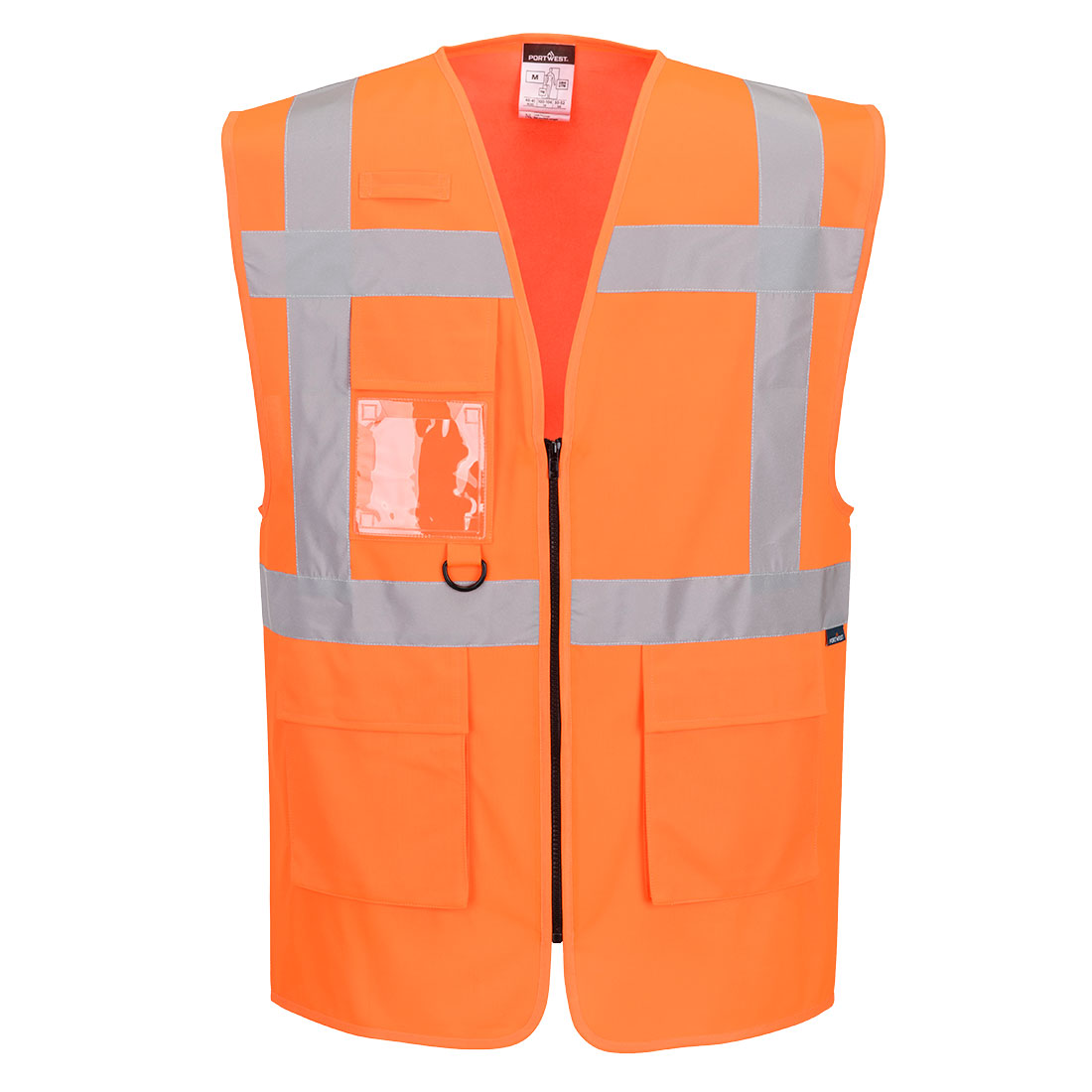
Vests · ES476
ES1 Essential Hi-Vis Executive Vest
Despatched within 1-2 working days

Vests · ES470
ES1 Essential Hi-Vis Band and Brace Vest
Despatched within 1-2 working days

Vests · S476
Berlin Hi-Vis Executive Vest
Despatched within 1-2 working days
Check against your own risk assessment
This guide explains what the standard measures. It does not decide what is right for your site. Your employer's risk assessment and any client or industry rules decide which class and colour you must wear.
Common questions
Is Class 3 always better than Class 2?
Class 3 has more visible material, but better means suitable for the risk. If your site asks for Class 2, a Class 3 garment meets it, and if it asks for Class 3, a Class 2 garment does not. Comfort and temperature also matter, because a garment people take off protects nobody.
Do hi-vis garments wear out?
Yes. The fluorescent background fades with sunlight and washing, and reflective tape can crack or lose its shine. The label gives a maximum number of washes for the reflective material, and a faded or damaged garment should be replaced.
Does yellow or orange matter?
EN ISO 20471 allows fluorescent yellow, orange and red. The colour you need is usually a site or contract choice, so ask before you order.
Keep reading
Still not sure what you need?
Check the standard against your own risk assessment, and if you are still not sure, call us and talk it through with someone who knows the catalogue.