
Buying guide
Bump cap or hard hat: which do you need?
What is the difference between a bump cap and a hard hat, and which do I need?
The short answer
A bump cap made to EN 812 protects against knocks from walking or working into fixed objects, such as pipes, shelving or low beams. It is not designed to protect against falling or flying objects. An industrial safety helmet made to EN 397 is tested for shock absorption, resistance to penetration by a sharp object and flame resistance, and is the standard choice where something could fall on the wearer. Which one you need depends on the hazards in your own risk assessment: use a hard hat where there is a risk of falling objects, and a bump cap only where the risk is bumping the head.
The two standards side by side
| Standard | Product | Designed for |
|---|---|---|
| EN 812 | Industrial bump cap | Knocks from striking the head against fixed objects, such as low beams, pipework or shelving |
| EN 397 | Industrial safety helmet (hard hat) | Shock absorption, resistance to penetration by a sharp object and flame resistance, for sites where objects can fall |
A bump cap is not a hard hat
A bump cap does not protect against falling or flying objects. If anything could fall on the wearer, for example on a construction site or under a crane, a bump cap is the wrong product.
Extra marks on safety helmets
EN 397 includes optional requirements that a manufacturer may test for and mark on the helmet. These can include use at very low temperatures, electrical insulation, resistance to lateral deformation and resistance to molten metal splash. A helmet only has them if they are marked, so read the markings and the product details rather than assuming.
Choosing between them
- Choose a hard hat (EN 397) where your risk assessment shows a risk of falling objects, or where the site rules require one.
- A bump cap (EN 812) can suit low headroom, workshops, warehouses and food or engineering areas where the risk is striking the head on something fixed.
- If you need both, some sites use a helmet only where the overhead risk exists and a bump cap elsewhere. Follow the site rules.
- Whichever you use, check the fit and the adjustment, and replace the product if it has been struck or damaged, or if the maker's guidance on age says so.
Bump caps
Bump caps from the catalogue. The standard each product is made to is on its product page.
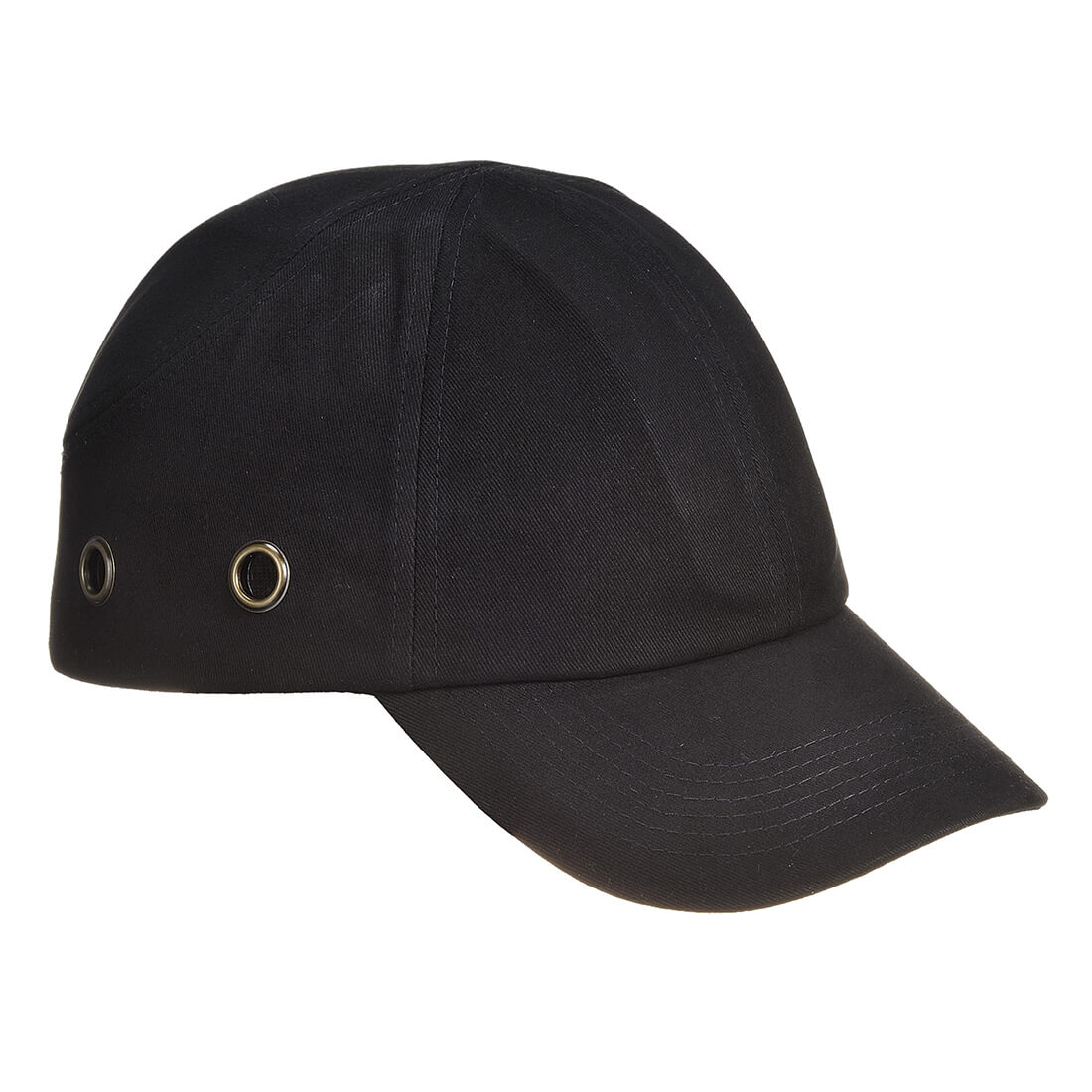
Bump Cap · PW59
Portwest Bump Cap
Despatched within 1-2 working days

Bump Cap · PS59
AirTech Bump Cap
Despatched within 1-2 working days

Bump Cap · PW69
Vent Cool Bump Cap
Despatched within 1-2 working days

Bump Cap · PW79
Long Peak Bump Cap
Despatched within 1-2 working days
Check against your own risk assessment
This guide explains what the standards cover. Your risk assessment and your site rules decide which head protection you must wear.
Common questions
Can I use a bump cap on a building site?
Only if the site rules and your risk assessment allow it. Most construction sites require a hard hat because of the risk of falling objects, which a bump cap is not designed for.
Do hard hats expire?
The shell and harness can degrade with age, sunlight and use. Follow the manufacturer's guidance on the service life and replace a helmet that has been struck or is damaged.
Are bump caps adjustable?
Many are, with an adjustable band or size range stated on the product page. Check the stated head size range before you buy.
Keep reading
Still not sure what you need?
Check the standard against your own risk assessment, and if you are still not sure, call us and talk it through with someone who knows the catalogue.